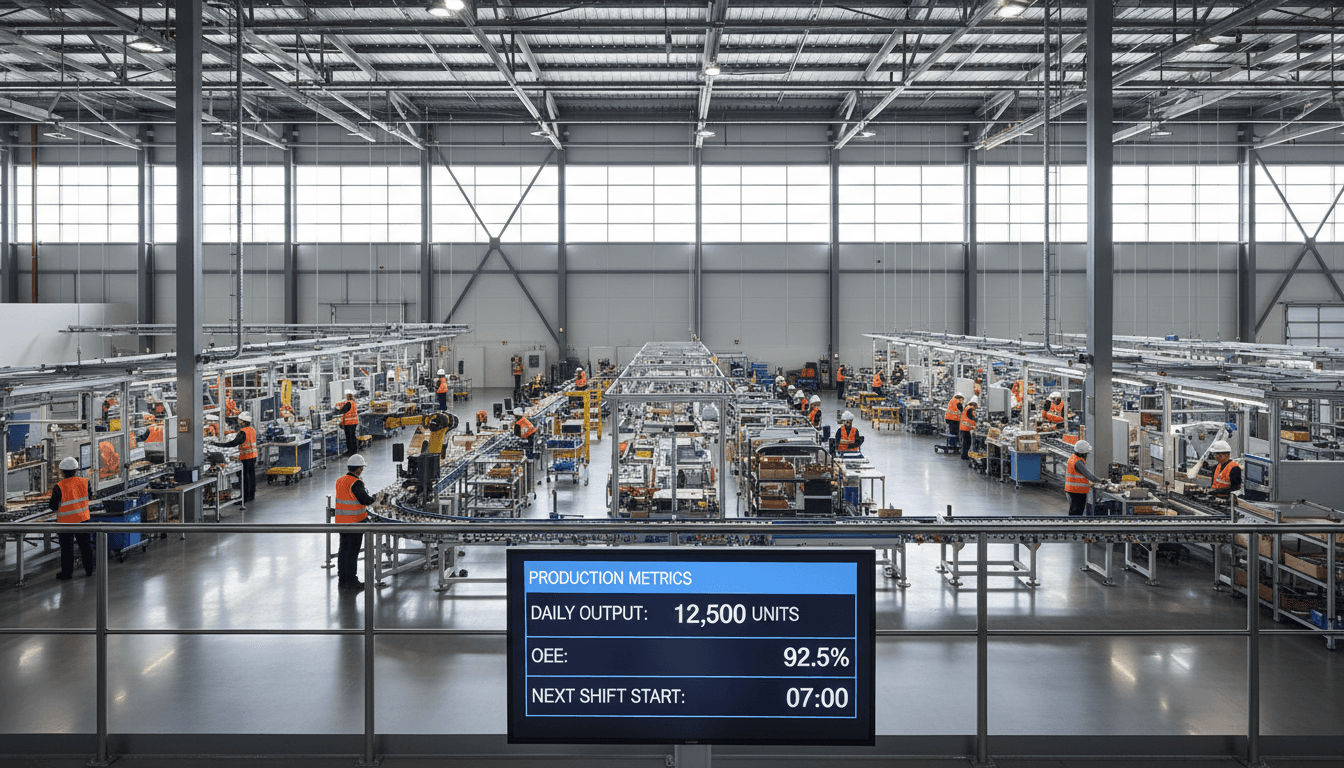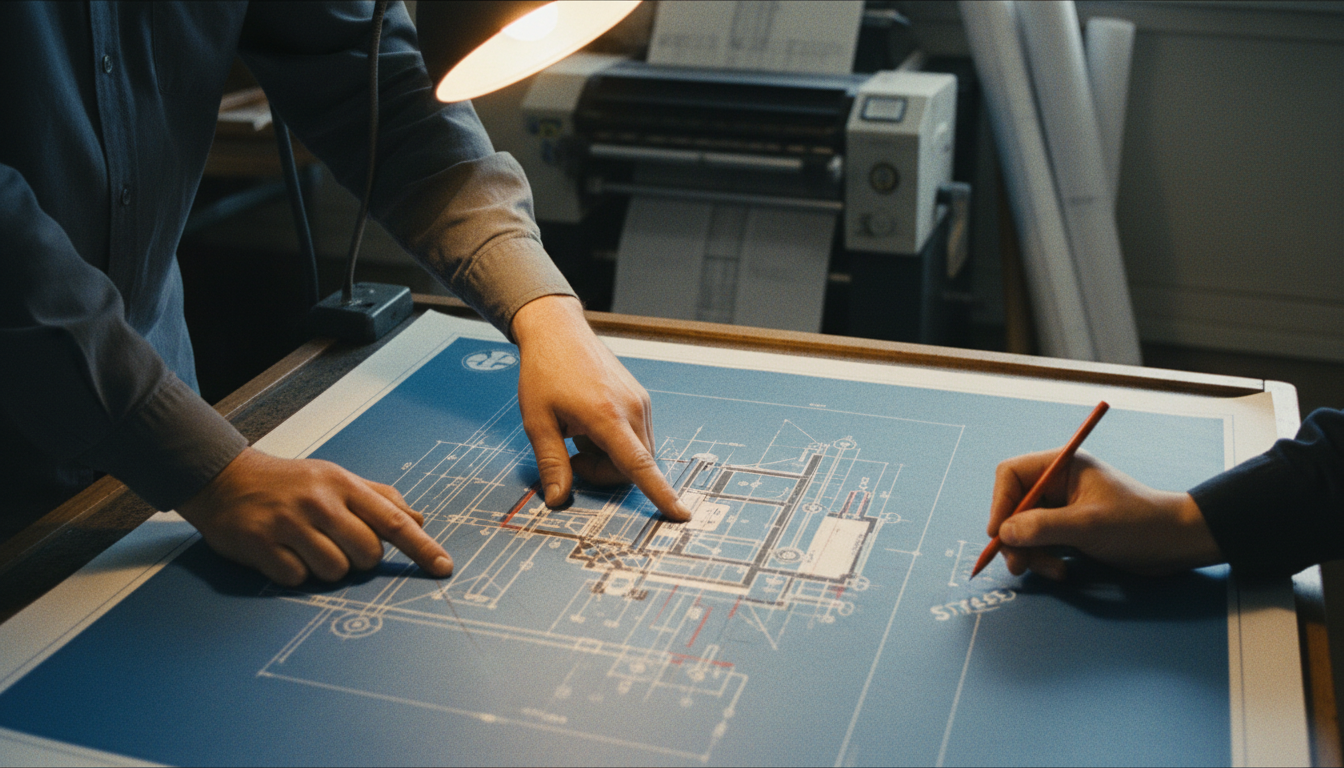
Design for manufacturing consulting identifies hidden production risks such as tool accessibility issues, complex geometries, and material inefficiencies before they become costly errors. By conducting a thorough DFM review early, companies can optimize part designs for specific fabrication processes; this ensures a seamless transition to mass production while protecting significant tooling investments.
Launching a new product line only to discover that your CAD models are functionally incompatible with the production floor is a catastrophic expense. When millions of dollars in custom tooling are at stake, a theoretical design is simply not enough. You need a transition strategy that accounts for material physics and specific machine limitations. This post explores how a professional DFM review bridges the gap between digital prototypes and mass production. You will learn about the conflict between Raw-CAD and reality, the five critical issues our consultants catch early, and how integrating cloud databases secures your investment. We also detail the technical nuances between DFM, DFA, and DFMEA to ensure your facility commission is built on a foundation of operational excellence.
Bridging the Gap Between Prototypes and Mass Production
Design for manufacturing consulting represents the critical transition point where a conceptual success becomes a commercial reality. For a turnkey engineering firm, this process involves more than verifying dimensions or material compatibility. While a prototype successfully proves a physical concept, a professional DFM review ensures that the same concept can be produced 10,000 times with consistent reliability and profit margins. The goal is to move beyond a singular success toward a repeatable, industrial process.
Many firms mistake a basic sanity check for true design for manufacturing. A cursory glance might confirm that a part can be machined, but industrial operational consultants provide a much deeper analysis. We evaluate how a design impacts custom machine programming, facility infrastructure, and direct labor costs. At Lebron Industrial, we integrate these reviews with the broader requirements of turnkey manufacturing plant designs. We consider the electrical loads required for high-speed production and the specific industrial plumbing needed for coolant systems; this ensures the design does not just work in a vacuum but excels within a live production environment.
Operating within the New Jersey and New York metro areas, specifically around Parsippany-Troy Hills, introduces unique variables into the manufacturing equation. Industrial floor space is a premium commodity. Consequently, high-end design for manufacturing reviews must prioritize footprint optimization and high-density assembly configurations. Furthermore, local utility costs necessitate designs that minimize machine cycle times and energy consumption. By addressing these factors during the design phase, we bridge the gap between a fragile prototype and a robust, scalable production line that respects the physical and financial constraints of the region.
The Raw-CAD vs Reality Conflict
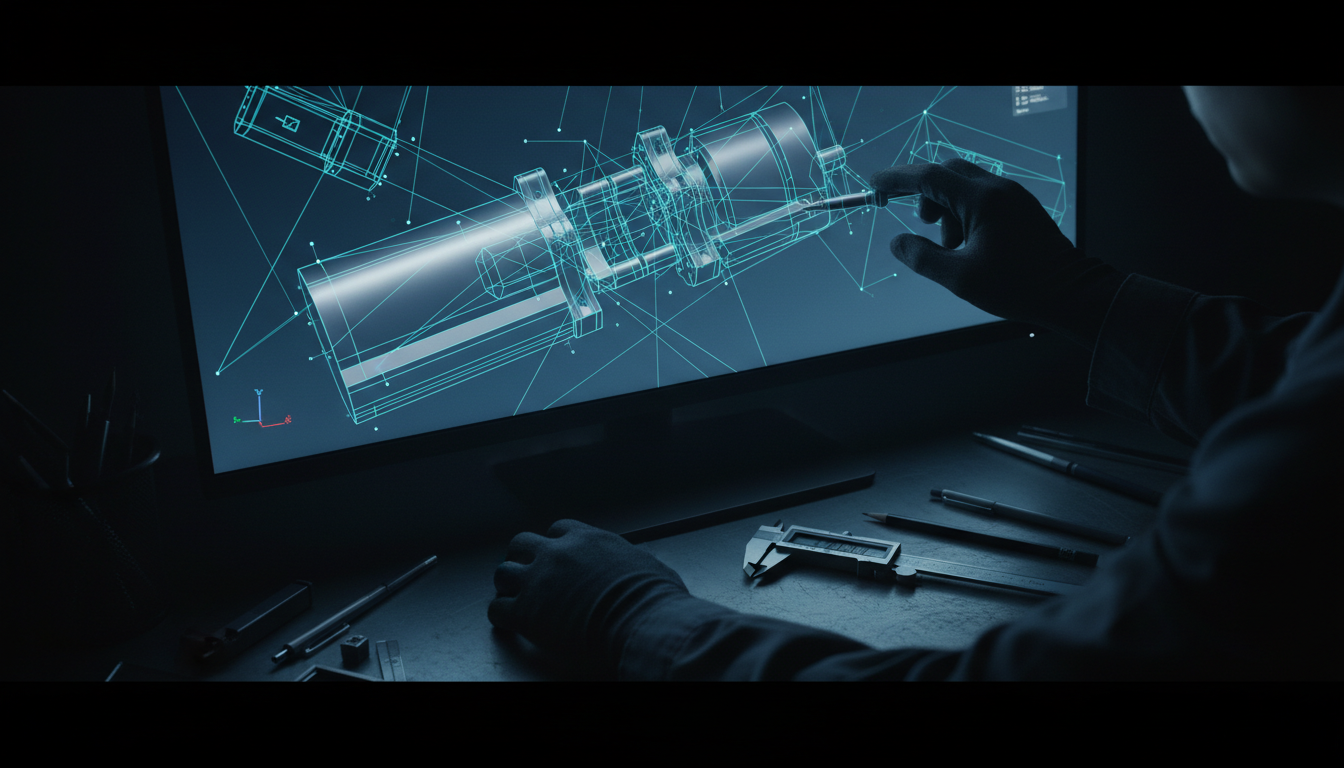
The digital environment of a CAD suite is a frictionless vacuum where every corner is perfectly sharp and every pocket is infinitely accessible. We refer to these idealized files as Raw-CAD. While these designs are geometrically sound, they often ignore the physical realities of the shop floor. CAD software frequently fails to account for tool deflection; as a cutting tool extends deep into a part, lateral forces cause it to bend, resulting in dimensional inaccuracies or tool failure.
Specific engineering hurdles, such as deep internal pockets, often appear benign on a high-resolution monitor. In reality, these features require specialized, long-reach cutting tools that must be operated at significantly lower speeds to maintain stability. This directly increases cycle times and production costs. Furthermore, Raw-CAD often neglects material stresses, where aggressive material removal causes a component to warp as internal tensions are released.
Our approach to high-end design for manufacturing reviews shifts the focus from digital perfection to Design for Reality. We evaluate designs based on the physical constraints of the specific equipment integrated into our turnkey manufacturing plant designs. By identifying these conflicts early, our design for manufacturing consulting ensures that the final geometry respects the laws of physics and the limitations of tooling, rather than just the capabilities of the software.
5 Critical Issues a Professional DFM Review Catches
Transitioning from digital models to the shop floor requires a rigorous audit of physical feasibility. While general industry guidelines offer a foundation, a professional high-end design for manufacturing review identifies five specific failure points that frequently disrupt production schedules and inflate overhead in a live environment.
Tool Accessibility: Geometry that looks clean in a CAD environment may be physically impossible for a standard CNC spindle to reach. We evaluate the clearance required for tool holders and identify features that would necessitate specialized, expensive long-reach tools or additional setups. Eliminating these requirements early reduces cycle times and prevents the need for niche tooling that complicates inventory management.
Tolerance Stack-Up: Over-engineering tolerances is a common driver of hidden costs. Unnecessarily tight tolerances demand slower machining passes, more frequent tool changes, and exhaustive inspection protocols. As industrial operational consultants, we determine where tolerances can be relaxed without sacrificing function, which directly improves yield and reduces the load on quality control sensors.
Wall Thickness and Rigidity: Digital models do not account for the physics of vibration. Unsupported thin walls often experience chatter during high-speed machining, which destroys surface finishes and leads to premature tool failure. We ensure wall aspect ratios are compatible with the specific spindle speeds and torque profiles of the machinery we integrate into our turnkey manufacturing plant designs.
Material Selection for Scale: A design optimized for a prototype resin often behaves differently when transitioned to production-grade metals or injection-molded plastics. We analyze how material thermal expansion, shrinkage, and flow rates will impact the repeatability of the part during 24/7 production cycles.
Assembly Complexity: While reducing part count is a standard objective, we evaluate it through the lens of facility logistics. Fewer parts mean fewer workstations, simplified industrial plumbing for pneumatic tools, and a reduced footprint for the assembly line, which is critical for maximizing high-value floor space in the New Jersey metro area.
By addressing these issues, we move beyond the theoretical 8 Principles of DFM. We view every component through the eyes of a firm that must install the equipment and commission the facility. This ensures the part is not just manufacturable in a vacuum, but optimized for the specific electrical infrastructure and custom programming that will drive the production line.
Protecting Your Tooling Investment
The transition from digital models to physical production represents the point of greatest financial risk. Once a hardened steel mold is cut or a custom die is cast, the geometry is functionally locked; any oversight in the CAD phase becomes a compounding liability. As industrial operational consultants, we observe that a design revision costing $500 in the digital environment often escalates to a $50,000 rework or total replacement once the physical tooling exists. This fiscal reality makes professional design for manufacturing consulting a prerequisite for any significant capital expenditure.
Early validation prevents the phenomenon of tooling lock-in, a state where a firm is forced to accept sub-optimal cycle times or high scrap rates because the cost of re-tooling is prohibitive. We mitigate this by performing high-end design for manufacturing reviews before the first piece of equipment is even purchased. By simulating tool paths and material flow against the actual capabilities of the machinery specified in our turnkey manufacturing plant designs, we ensure that the capital invested in tooling yields a high-performance asset rather than a sunken cost. This proactive financial management ensures that firms in the Parsippany-Troy Hills region can scale their operations without the burden of expensive, late-stage engineering corrections that eat into narrow margins.
Integrating Cloud Databases and Machine Programming

Modern production environments require more than physical feasibility; they require digital transparency. A comprehensive high-end design for manufacturing review by industrial operational consultants extends beyond physical geometry to evaluate how a component interacts with custom machinery programming. Every part produced is a data point. We integrate cloud database tracking into the design phase to ensure each unit can be serialized and monitored throughout the workflow; this provides real-time visibility into throughput and quality from the moment a raw component enters the line.
This integration relies heavily on the underlying electrical infrastructure and PLC (Programmable Logic Controller) logic. If a part design requires complex orientation or multiple sensor triggers, the PLC programming must reflect these requirements without increasing latency. By factoring these needs into the turnkey manufacturing plant designs, we eliminate the technical debt that occurs when hardware and software are developed in isolation. This foresight ensures that the facility commissioning process is not delayed by software-hardware mismatches.
Integration Layer | Industrial Operational Focus |
|---|---|
PLC Logic | Aligning custom machine routines with physical part geometry to minimize cycle time. |
Cloud Databases | Establishing the data architecture for real-time tracking from raw material to finished good. |
Electrical Infrastructure | Ensuring localized power and data ports support high-speed sensors and automated robotics. |
Understanding the Technical Differences: DFM, DFA, and DFMEA
Data transparency and synchronized programming are only effective when the underlying design methodologies are clearly defined and applied. A professional design for manufacturing consulting engagement distinguishes between DFM, DFA, and DFMEA to ensure every facet of production is optimized. While DFM focuses on the cost and ease of fabricating individual components, DFA (Design for Assembly) evaluates how those parts interact. The goal of DFA is to minimize assembly time by reducing part counts and simplifying the physical ways parts connect. This is particularly vital in the NJ metro area, where high labor costs make efficient assembly lines a requirement for profitability.
To bridge the gap between efficiency and reliability, industrial operational consultants implement DFMEA (Design Failure Mode and Effects Analysis). This systematic approach identifies potential failure points in the design before they reach the production floor. By quantifying the risks associated with specific geometries or material choices, we can engineer preventive measures directly into the turnkey manufacturing plant designs.
Methodology | Primary Objective | Core Focus Area |
|---|---|---|
DFM | Fabrication Efficiency | Optimizing individual part geometry to reduce machining time and tool wear. |
DFA | Assembly Optimization | Reducing part counts and simplifying the physical mating of components. |
DFMEA | Risk Mitigation | Identifying potential failure modes and their impact on the final product lifecycle. |
These three pillars work in tandem during high-end design for manufacturing reviews to create a production plan that is not just physically possible, but financially and operationally resilient. By integrating these methodologies, we move beyond simple checklists and toward a robust engineering strategy that anticipates the demands of high volume manufacturing.
The Lebron Industrial Approach to Facility Commissions

Facility commissions represent the culmination of engineering theory meeting operational reality. At Lebron Industrial, design for manufacturing consulting serves as the foundational phase for every turnkey manufacturing plant design. Because we manage heavy equipment relocation and the installation of custom electrical infrastructure, our high-end design for manufacturing reviews are grounded in the physical constraints of the Parsippany-Troy Hills production environment.
We do not evaluate parts in isolation; we analyze them against the specific floor load capacities and utility distributions of the actual plant. This integrated perspective ensures that when we act as industrial operational consultants during a facility commission, the equipment, programming, and product geometry function as a singular, high-performance system. By bridging the gap between design and physical plant engineering, we ensure that the transition to mass production is seamless and structurally sound.