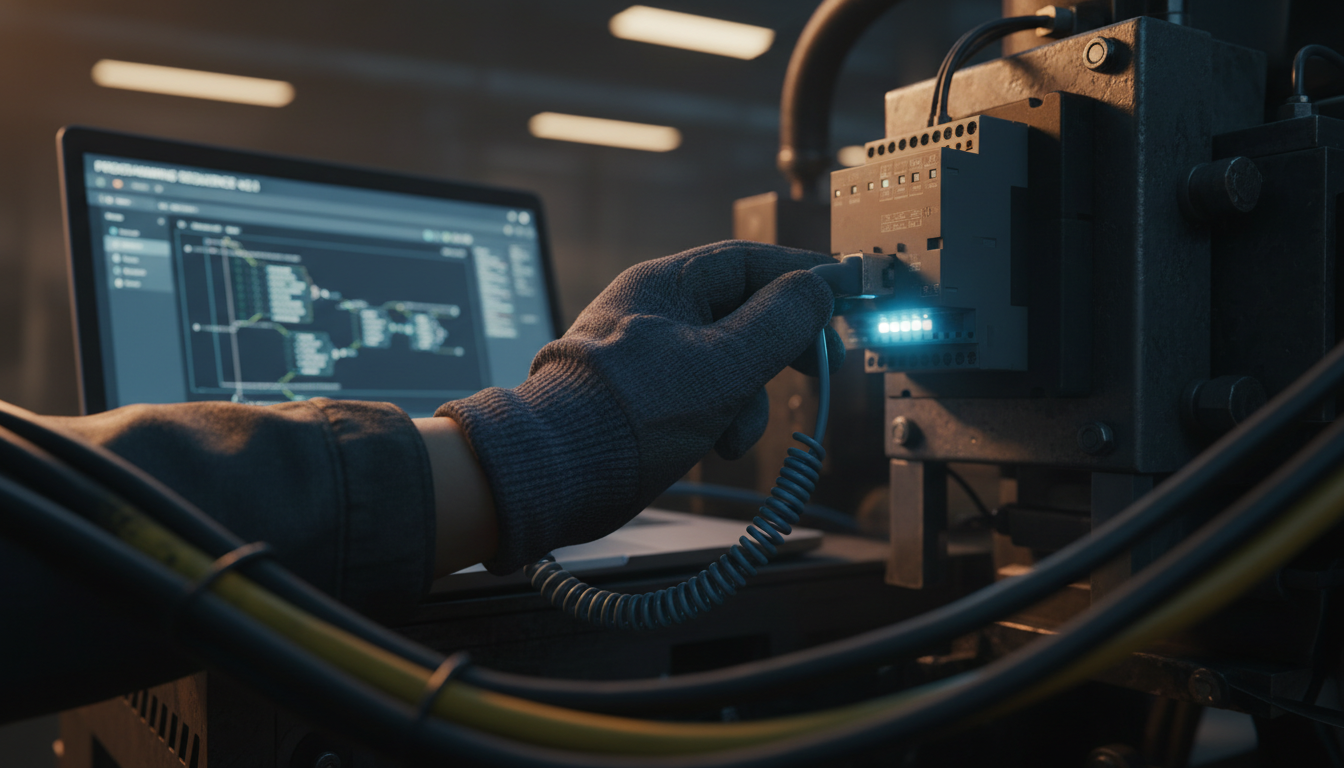
Effective troubleshooting plc controls begins with a systematic inspection of the power supply and diagnostic indicators to identify hardware malfunctions. Operations managers can quickly resolve line down events by verifying input signals, checking output status, and reviewing program logic for communication errors. This structured approach minimizes downtime by isolating common issues like faulty wiring, blown fuses, or software glitches.
You hear the silence before you see the warning lights. For an operations manager, a stalled production line is not just a technical glitch; it is a direct hit to your quarterly margins. When PLC controls fail, the immediate pressure to restore throughput often leads to frantic, unorganized guesswork. This unsystematic approach is both inefficient and costly. At Lebron Industrial Operational Consultants, we prioritize disciplined recovery over reactive troubleshooting. This guide provides a rigorous framework for navigating line down events with precision. You will learn to execute an effective five minute triage; diagnose complex I/O failures; and mitigate environmental factors such as ground loops. We also examine ladder logic complexities and define exactly when to escalate to an industrial engineering consultant. By mastering these protocols, you can transform a chaotic breakdown into a controlled, professional restoration of service.
The High Cost of Industrial Downtime: Why PLC Troubleshooting Matters
For manufacturing facilities across the New Jersey and tri-state area, downtime is not just a technical delay; it is an aggressive drain on the bottom line. In high-density industrial hubs like Parsippany-Troy Hills, the overhead associated with labor, logistics, and missed delivery windows means that every hour of inactivity can cost tens of thousands of dollars. To an operations manager, a line-down event represents a direct threat to the facility’s annual performance metrics and overall profitability.
The Programmable Logic Controller acts as the brain of the operation, coordinating every movement on the plant floor. However, at Lebron Industrial Operational Consultants, we have observed that a PLC fault is rarely an isolated software glitch. It is more often a symptom of stresses within the broader facility, ranging from compromised electrical infrastructure to mechanical fatigue in field devices. Successful recovery requires looking beyond the code to understand how the hardware interacts with the environment.
Effective custom machinery programming must account for the physical realities of the production environment. When a manager focuses on troubleshooting plc controls, the goal is not merely to clear an error code but to protect operational continuity and secure the return on investment for the entire production line. Bridging the gap between a prototype struggle and mass production reliability starts with recognizing that the PLC is only as robust as the system surrounding it.
Primary Steps for Troubleshooting PLC Controls: The Five Minute Triage
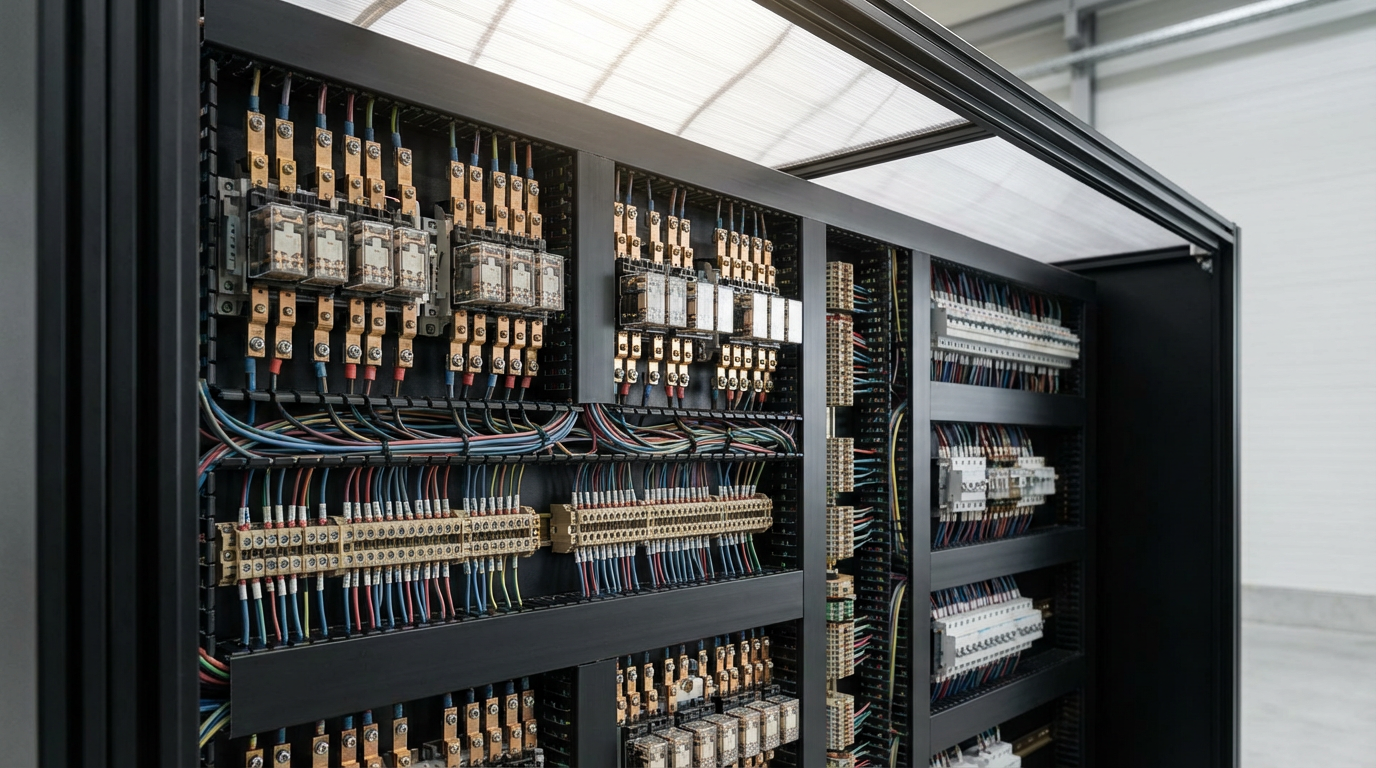
When a production line halts, the first five minutes dictate whether the recovery takes one hour or ten. The immediate goal for an operations manager is to facilitate a rapid, structured assessment before escalating to deep systems engineering. This initial triage focuses on the physical state of the controller to rule out simple hardware failures that often mimic complex software glitches.
Begin by observing the status indicator lights, which serve as the primary diagnostic interface for troubleshooting plc controls. On Allen Bradley Logix controllers, a solid green RUN light indicates the processor is executing code; a flashing red FLT LED signifies a major recoverable fault. For Siemens SIMATIC platforms, the SF (System Fault) or ERROR LEDs provide similar cues. If a BATT or MAINT indicator is illuminated, the internal backup battery is likely depleted. This is a critical warning; a subsequent power loss could wipe the volatile memory and require a full reload of the custom machinery programming.
LED Indicator | Allen Bradley Meaning | Siemens Meaning | Initial Action |
|---|---|---|---|
Green (Solid) | Run Mode / System OK | Run Mode | Monitor I/O status |
Red (Flashing) | Recoverable Major Fault | Error / Diagnostic | Clear fault via software |
Red (Solid) | Hardware Failure | System Fault (SF) | Cycle power; check rack |
Amber / Yellow | Battery Low | Maintenance (MAINT) | Replace battery immediately |
If the PLC is not communicating correctly, verify the physical seating of all communication cables. High vibration environments can cause RJ45 or M12 connectors to unseat slightly, breaking the handshake between the PLC and the HMI. Next, check the power supply module. A dark or flickering LED suggests an issue within the electrical infrastructure or a localized failure of the 24V DC supply. These basic plc troubleshooting steps ensure that the team does not waste hours chasing logic errors when the problem is a physical disconnection. By standardizing these plc troubleshooting basics, Lebron Industrial Operational Consultants helps facilities maintain continuity through structured response protocols.
Diagnosing Input and Output (I/O) Failures: Bridging Hardware and Logic

Once you have confirmed basic power and communication, the focus shifts to the I/O interface. This is where custom machinery programming interacts with the physical world. Diagnosing these failures requires a dual-track approach: verifying the logic state within the controller and testing the physical voltage at the terminal block.
A maintenance technician should first use a multimeter to check for voltage at the specific I/O point. For example, if a proximity sensor is triggered but the PLC input LED remains dark, the issue is likely a field device failure or a wiring break. Conversely, if the PLC sees the input but the corresponding output does not fire, the conflict may lie in the software logic or a blown output module fuse.
Diagnostic Target | Tool Required | Common Point of Failure |
|---|---|---|
Field Device (Sensor/Switch) | Multimeter | Physical misalignment, debris, or cable fatigue |
I/O Module | Software Diagnostic | Internal fuse or relay failure |
Logic Path | Programming Terminal | Missing permissive or interlocking condition |
It is critical to remember that many so-called software errors are actually downstream mechanical issues. In facilities where we oversee electrical infrastructure, we often find that clogged industrial plumbing or moisture in pneumatic lines causes solenoids to lag. The PLC correctly identifies that the cylinder did not reach its stroke limit within the programmed timeframe and throws a timeout error. The logic is functioning perfectly; the physical media is not. If the physical components and voltages check out, the problem likely requires a controls engineer to review the code. If the voltage is absent at the sensor, a maintenance technician is the correct first call. This distinction prevents the unnecessary escalation of simple hardware swaps to Lebron Industrial Operational Consultants for complex system re-engineering.
Environmental Factors: Ground Loops and Electrical Infrastructure
In the legacy industrial corridors of Parsippany-Troy Hills, the age of a facility often correlates directly with the frequency of ghost errors. When troubleshooting plc controls, one must account for the physical environment, particularly the integrity of the local electrical infrastructure. Many older industrial parks possess grounding systems that have degraded over decades or were never designed for the low voltage sensitivity of modern microprocessors.
A common culprit for intermittent resets or data corruption is the ground loop. This occurs when two interconnected devices are grounded at different physical locations, creating a voltage potential difference. This differential forces current to flow through communication shields or signal wires, introducing noise that disrupts custom machinery programming. If a PLC performs perfectly during a night shift but fails when a neighboring heavy press starts up, the issue is likely a grounding or harmonic distortion problem rather than a logic error.
Environmental Factor | Physical Impact | Operational Symptom |
|---|---|---|
Ground Loops | Signal noise on 0V reference | Intermittent communication loss or I/O flickering |
High Humidity | Condensation on PCB surfaces | Trace corrosion or localized short circuits |
Dust Accumulation | Thermal insulation of components | Unexpected CPU resets due to overheating |
Vibration | Mechanical stress on terminal blocks | Intermittent loss of field device signals |
Particulate matter and moisture levels also dictate hardware longevity. At Lebron Industrial Operational Consultants, we frequently observe facilities leaving control cabinets open to combat heat, which inadvertently invites conductive dust and humidity to settle on the backplane. Proper facility commissioning ensures that the environment is controlled and the grounding grid meets modern standards, preventing these external variables from compromising your production uptime.
Advanced Techniques: Troubleshooting PLC Ladder Logic and Cloud Connectivity
When physical infrastructure is verified, troubleshooting plc controls moves into the software domain. This requires a technician to go online with the processor using specific plc troubleshooting software. Before an emergency occurs, your team must ensure that current program backups are stored securely and that communication drivers, such as RSLinx for Allen Bradley or TIA Portal for Siemens, are pre-configured on field laptops. Attempting to download drivers or search for the correct firmware version while the line is down adds unnecessary hours to the recovery timeline.
During a ladder logic review, engineers examine the graphical representation of the program to identify where a process sequence has stalled. We look for unfulfilled permissive conditions, such as a safety interlock that is logically open despite physical sensors appearing normal. Lebron Industrial Operational Consultants enhances this process by integrating cloud database tracking into the custom machinery programming. By aggregating real-time I/O data in the cloud, we identify historical patterns of failure that a standard ladder logic review might miss. For instance, if an output module sporadically flickers milliseconds before a system crash, cloud logs provide the forensic evidence needed to pinpoint a failing relay or a subtle electrical infrastructure anomaly. This data-driven approach transforms reactive fixes into predictive stability, ensuring mass production reliability.
Common Causes of PLC Failure and Preventive Strategies
Identifying why controllers fail is the first step toward a proactive maintenance culture. The most common causes of PLC failure include hardware fatigue in output relays, battery depletion that leads to loss of volatile memory during power cycles, and improper heat dissipation. High internal temperatures inside control cabinets significantly shorten the lifespan of the CPU and I/O modules. To avoid being at the mercy of shipping lead times, Lebron Industrial Operational Consultants recommends maintaining a spare parts inventory based on the 10% rule. This means stocking one spare for every ten units of a specific module type, while ensuring at least one backup CPU board and power supply module are always on-site.
Preventive Maintenance Checklist
Replace back-up batteries annually to protect your custom machinery programming.
Clean or replace cabinet air filters and confirm cooling fans are moving air efficiently.
Tighten all terminal block connections to mitigate the effects of industrial vibration.
Audit the electrical infrastructure for signs of thermal stress or cable insulation degradation.
Applying these strategies reduces the frequency of troubleshooting plc controls and ensures the facility operates at peak reliability.
When to Call an Industrial Engineering Consultant

Internal maintenance teams excel at the rapid replacement of failed sensors or power modules, but systemic instability requires a higher tier of technical intervention. When troubleshooting plc controls reveals recurring "ghost" errors that leave no clear diagnostic trace, the root cause often resides deep within the electrical infrastructure or a fundamental flaw in the underlying control logic. These intermittent faults frequently stall the transition from a successful prototype to high-volume mass production reliability.
Engaging Lebron Industrial Operational Consultants becomes essential when modifications to custom machinery programming are required to accommodate increased cycle times or when a formal Design for Manufacturing (DFM) review is needed to rectify production bottlenecks. We specialize in bridging the gap between engineering theory and floor-level reality. If a line-down event suggests complex logic conflicts, cross-platform synchronization failures, or the need for integrated cloud database tracking to monitor performance, professional engineering intervention ensures the facility moves beyond temporary fixes toward sustained operational excellence.